Moving the console and MCP server to our published SDK
How we connected SDK generation, release checks, and documentation, then moved the GoodMem console and MCP server onto our published TypeScript SDK.
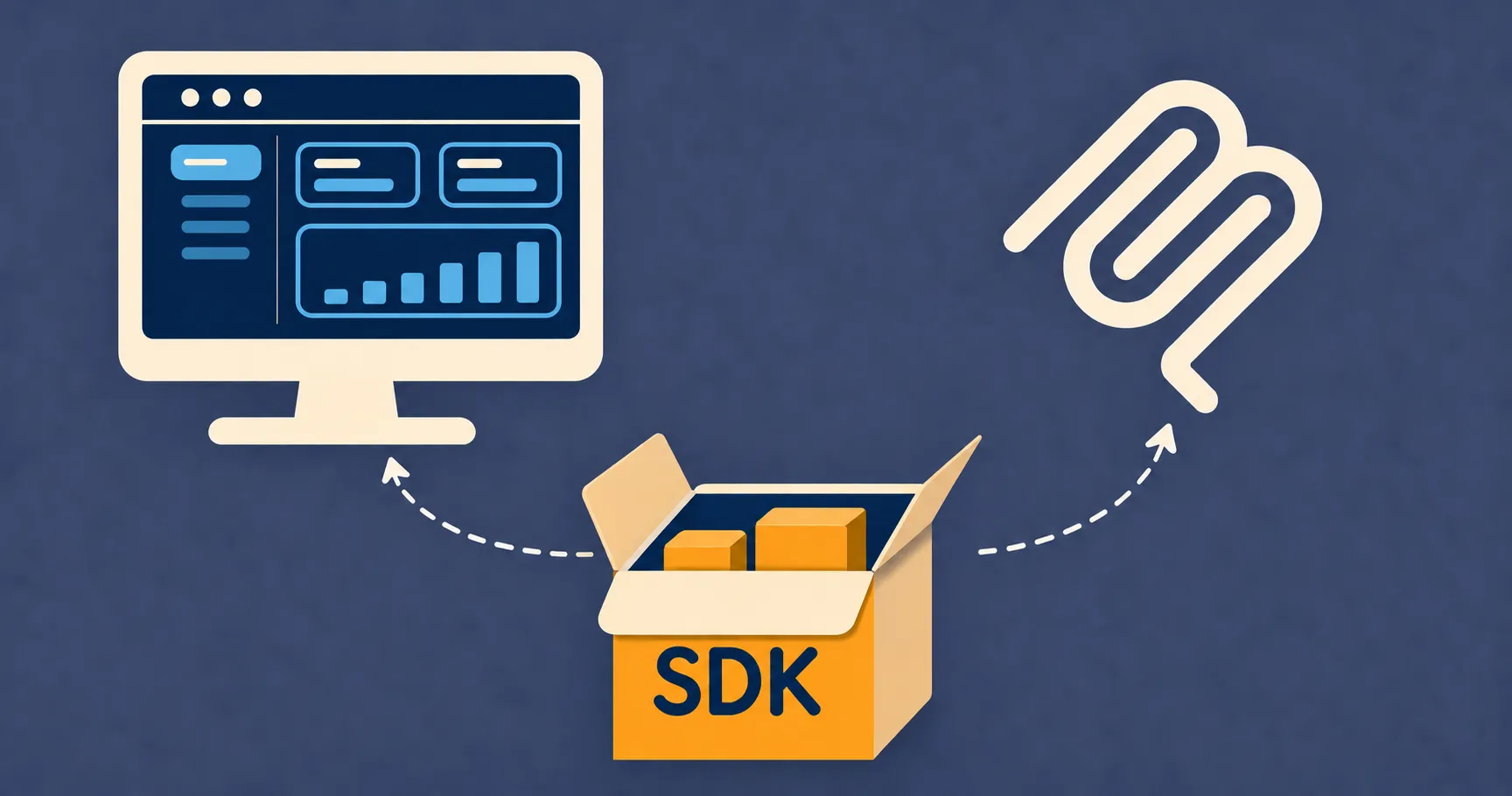
GoodMem’s web console had its own generated API client. Our MCP client/server had its own HTTP transport. We also published a TypeScript SDK for applications.
A change to the server’s API could require work in all three places. After rewriting the Console and MCP clients to use the TypeScript SDK, we only need to watch one place.
Before changing those applications, we added robust CI/CD for package management.
Publishing when the package version changes
We publish SDKs for Python, TypeScript, Java, .NET, and Go. JavaScript applications use the TypeScript package. MCP is also a separate package with its own version.
The CI/CD checks compare the versions with the current base branch to catch version numbers that another release has already used.
The check covers generated source, handwritten runtime code, and package metadata. Changes confined to tests generally do not need a new version.
If publication fails for one package, the workflow records the result for each package and instructions for recovery in a tracking issue.
Checking and reviewing generated code
To check for stale generated code, CI regenerates the clients and compares the result with the committed files.
When the API changes, the regeneration workflow prepares a pull request if the generated package contents have changed. It skips the PR when there is no difference.
For changes classified as additive, the workflow can also prepare version bumps. If a change could break compatibility, a maintainer must review it and choose the version. Maintainers review and merge the generated PRs before publication.
Adapting the console to the SDK
With those release checks in place, we changed the console to depend on @pairsystems/goodmem and removed its separate generated API client.
The console needed an adapter for its browser behavior. Saved connection profiles could include /v1 in the base URL, and the SDK also added /v1 to requests. We adjusted those base URLs so existing configurations would not produce paths containing /v1/v1.
We kept credentials isolated between profiles, passed cancellation through to the SDK, preserved page-image bytes, and kept streaming responses visible in the debug panel. For debugging, the adapter reads the response bytes as they pass to the SDK. Reading a separate cloned stream could keep a request alive after cancellation.
We added tests for cancellation, pagination, error messages, and binary responses to check that the console still behaved as expected.
Moving MCP to the same SDK
We replaced MCP’s HTTP transport with the published TypeScript SDK as well. The MCP server still defines the tools and presents results to the calling agent.
Its transport tests cover JSON responses, binary data, streamed events, timeouts, and redirects. We also tested an explicitly empty filter, a JSON null response, and a UTF-8 character split across streamed chunks.
Both applications now use the same TypeScript SDK that we publish for application developers. Each has tests for the behavior that its users depend on.
The console migration removed a generated API client file that contained 12,280 lines. Across the console directory, the merged change added 2,269 lines and removed 17,876, for a net reduction of 15,607 lines. That count includes source, tests, documentation, and dependency metadata.